






Tel:
+86-0511-88891902

What are you looking for?
A cable knit beanie should be sourced according to its knit structure, yarn behavior, fit and finished appearance—not simply by selecting a cable pattern from a supplier catalog. The cable itself changes the fabric's thickness, stretch, visual scale and yarn consumption, so private-label brands need to evaluate construction and fit together.
For most commercial winter collections, the key decisions are yarn composition, gauge, cable scale, rib structure, crown construction, stretch recovery, cuff height, branding method and packaging. Sample approval should confirm both the visual design and the physical behavior of the beanie after wear and handling.
A private-label brand should also establish whether the beanie is intended to be fitted, standard, slouchy or oversized before the factory develops the final pattern.
The primary difference is the structure of the knitted fabric.
A standard rib-knit beanie can provide relatively straightforward stretch and recovery. A cable knit introduces a three-dimensional pattern created by manipulating stitches. This adds texture and visual depth but can also affect fabric thickness and consumption.
The cable pattern therefore influences:
yarn usage;
finished weight;
stretch;
recovery;
hand feel;
warmth;
crown appearance;
production complexity.
For brands targeting a premium winter aesthetic, cable construction can create a stronger tactile identity than a basic knit.
However, a more complicated pattern does not automatically mean better quality. The cable should remain consistent, clean and symmetrical, and the fabric should recover properly after stretching.
The appropriate yarn depends on the desired combination of softness, warmth, appearance and cost.
Common options include acrylic, wool, wool blends, recycled fibers, polyester and blended yarns.
| Yarn Type | Typical Benefit | Main Consideration |
|---|---|---|
| Acrylic | Cost efficiency, color range | Pilling and hand feel |
| Wool | Warmth and natural character | Cost, shrinkage, care |
| Wool/Acrylic Blend | Balance of performance and price | Blend consistency |
| Polyester | Durability and color control | Hand feel and breathability |
| Recycled Yarn | Sustainability positioning | Certification and traceability |
| Cotton Blend | Softer transitional feel | Lower thermal performance |
The buyer should evaluate yarn by the finished fabric rather than by fiber name alone.
Two acrylic yarns can have very different softness, bulk, sheen and pilling performance. Likewise, two wool blends can behave differently depending on yarn construction and finishing.
For brands making sustainability claims, documentation should support those claims. Textile Exchange's standards framework is increasingly focused on traceability and responsible material production, with its Materials Matter Standard scheduled to become effective at the end of 2026 and mandatory for relevant certified organizations from the end of 2027.
Gauge describes the knitting machine's stitch density and is an important technical factor in beanie development.
A finer gauge can produce a cleaner, lighter fabric, while a heavier construction can provide greater bulk and warmth. However, the relationship is not simply "higher gauge equals better quality."
Cable patterns require sufficient space for the stitch structure to remain visible.
The buyer should therefore evaluate:
stitch definition;
fabric thickness;
stretch;
recovery;
surface appearance;
yarn coverage;
finished weight.
The best gauge is the one that produces the intended commercial appearance and wear performance.
Cable scale should match the target customer and product silhouette.
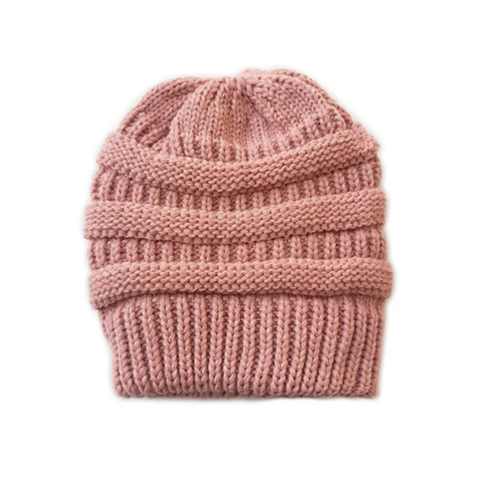
Large cables create a bold, chunky appearance and work particularly well with oversized winter accessories. Smaller cables produce a more refined surface and can be easier to coordinate with premium or minimalist collections.
The cable pattern should also remain proportional to the beanie.
A large cable on a small fitted beanie can visually overwhelm the product. Conversely, a very small pattern on an oversized beanie may lose its visual impact.
For brands reviewing supplier capabilities, actual wholesale cable knit beanies can be useful as a benchmark for evaluating cable scale, construction and commercial positioning.

Fit should be specified before sampling.
Common commercial fits include:
close-fitting;
standard;
relaxed;
slouch;
oversized.
The fit is influenced by head circumference, opening circumference, fabric stretch, cuff height and crown depth.
A beanie that measures correctly when flat can still feel too tight because the knit has insufficient recovery. Conversely, a loose opening can make the beanie slide during use.
Fit should therefore be measured both flat and under controlled stretch.
The cuff performs both functional and visual roles.
A wider cuff can provide greater stability and create a traditional winter-beanie appearance. A narrow cuff produces a lighter fashion profile.
For private-label brands, the cuff is also one of the easiest areas for branding.
Possible options include:
woven label;
embroidered logo;
jacquard logo;
leather patch;
rubberized patch;
metal badge.
A logo patch should be tested for weight. If the patch is too heavy relative to the knit, it can distort the cuff.
The decision depends on the brand aesthetic and the knit structure.
Embroidery can create a strong visual statement, but dense embroidery may stiffen or distort a knitted surface. Woven labels provide sharper small-scale text and are often suitable for minimalist branding.
A jacquard knit beanie allows the logo to become part of the fabric itself. This can create a highly integrated appearance but requires earlier technical planning.
For private-label brands, the logo method should be approved together with the sample rather than after the product is finalized.
A complete sample should replicate:
final yarn;
final yarn color;
cable structure;
gauge;
cuff construction;
crown shape;
logo;
label;
finishing;
packaging where applicable.
A development sample using a substitute yarn should not be treated as the final approval sample.
Different yarns can change the cable definition and finished dimensions enough to affect the commercial result.
Sample approval should use a measurable checklist.
| Approval Area | Key Question |
|---|---|
| Yarn | Is the approved yarn actually used? |
| Gauge | Is stitch density consistent? |
| Cable | Are cables symmetrical and clearly defined? |
| Stretch | Does the opening stretch comfortably? |
| Recovery | Does the beanie return to shape? |
| Crown | Is the top construction clean? |
| Cuff | Is width and height correct? |
| Logo | Is position and scale correct? |
| Color | Does it match the approved standard? |
| Weight | Is finished weight within tolerance? |
| Finish | Are loose yarns and defects controlled? |
The sample should then be retained as a production reference.
Pilling is influenced by fiber properties, yarn construction, friction and finishing.
A buyer should not rely solely on the supplier's statement that a yarn is "anti-pilling."
Instead, establish a testing requirement appropriate to the product's market and use. If pilling performance is commercially important, testing should be conducted on the actual final fabric rather than a similar yarn.
Wear simulation and rubbing tests can reveal problems before bulk production.
Although many beanies are not washed frequently, care performance still matters.
After the appropriate care test, inspect:
dimensional change;
cable definition;
color;
surface fuzz;
seam stability;
cuff recovery;
logo attachment.
A wool-containing product requires particular attention to care instructions and labeling. The FTC notes that covered textile and wool products have specific labeling obligations, including fiber content and country-of-origin information.
Cable knit products can be compressed for shipping, but excessive compression can flatten the cable structure temporarily or permanently affect the appearance of certain yarns.
For retail collections, packaging may include:
individual bags;
branded paper bands;
hangtags;
belly bands;
recyclable packaging;
gift boxes.
The packaging specification should be approved together with the product because the finished folded dimensions affect carton capacity and shipping economics.
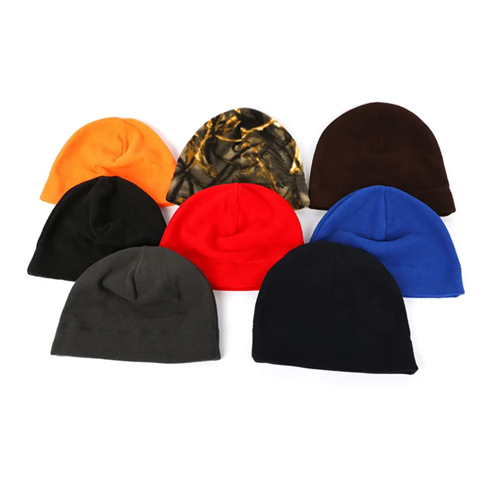
Brands expanding into other winter headwear may also benchmark beanie hat bulk programs when comparing basic knit constructions, pack ratios and assortment planning.
The distinction is primarily in design priorities.
A fashion cable beanie may prioritize:
oversized proportions;
decorative cables;
premium yarn appearance;
branding;
seasonal color.
A functional winter beanie may prioritize:
insulation;
secure fit;
moisture management;
durability;
easy care.
The two can overlap, but the product specification should identify which attributes have priority.
Before placing an order, buyers should ask about:
available gauges;
yarn sources;
cable patterns;
custom patterns;
MOQ;
sample lead time;
color development;
custom labels;
logo methods;
quality inspection;
packaging;
production lead time;
material testing.
The supplier should also be able to explain which design changes have the greatest effect on cost.
For example, changing from a basic rib knit to a complex cable structure may affect yarn consumption and production efficiency even if the finished dimensions remain unchanged.
Cable knit is a three-dimensional knitted structure created by manipulating stitches to form raised cable patterns. It adds texture, visual depth and often additional fabric bulk.
They can provide a thicker, more substantial fabric structure, but warmth depends on yarn, density, construction and fit rather than the cable pattern alone.
Acrylic, wool, wool blends and other yarns can all work. The appropriate choice depends on the intended price, warmth, hand feel, care requirements and brand positioning.
It should provide sufficient stretch around the head while maintaining recovery. Crown depth and cuff construction should match the intended fitted, standard, slouch or oversized silhouette.
Select appropriate yarn construction, specify performance expectations, test the actual finished product and inspect the fabric after controlled friction or wear testing.
The final yarn, color, gauge, cable pattern, dimensions, fit, logo, labels, finishing and packaging should all be confirmed before bulk production.
Cable knit beanie sourcing requires more technical control than simply choosing an attractive stitch pattern. The cable structure influences yarn consumption, fabric thickness, stretch, recovery and visual identity, while the yarn itself determines much of the product's hand feel and performance.
For private-label brands, the strongest approach is to define the desired silhouette first, select yarn and gauge around that silhouette, develop branding alongside the knit structure, and use a final pre-production sample as the manufacturing reference.
That process makes the finished beanie more consistent across colors and production runs while giving the brand greater control over quality, cost and retail presentation.