






Tel:
+86-0511-88891902

What are you looking for?
Sourcing a balaclava looks simple until the product is worn, washed, stretched, packed, and shipped at scale. A sample can appear acceptable on a desk while still creating complaints about restricted breathing, poor visibility, rough seams, unstable sizing, dye transfer, pilling, or inconsistent logo placement. For retailers, outdoor brands, promotional distributors, uniform programs, and private-label buyers, the commercial challenge is therefore not merely finding a low quotation. It is building a specification that a factory can reproduce consistently.
This guide is designed for buyers evaluating a balaclava China sourcing program. It explains how to translate an end-use idea into measurable product requirements, compare materials, assess a supplier's production capability, manage samples, review compliance documents, and establish quality-control checkpoints. It also shows where JIBIL can support product development as a custom headwear and apparel manufacturing partner.
The central sourcing principle is straightforward: a balaclava should be purchased as a fitted textile product, not as a generic fabric tube. Face opening geometry, seam position, stretch recovery, moisture management, finishing, labeling, and packaging all influence whether the delivered product performs as intended. These variables must be defined before price comparisons become meaningful.
A balaclava sourcing specification is a written set of end-use, material, dimensional, construction, branding, packaging, testing, and delivery requirements used to obtain comparable quotations.
Many quotation problems begin with an inquiry that contains only a picture, quantity, and target price. That information may be enough for a rough estimate, but it is not enough for a reliable production quotation. Two factories can quote products that look similar in a photograph while using different fabric weights, different yarn qualities, different seam structures, or different finishing processes.
Start by defining the intended user and environment. A lightweight running face cover, a winter fleece balaclava, a knitted promotional style, and a merino-blend outdoor product solve different problems. The buyer should identify whether the product is intended for daily commuting, skiing, cycling, construction uniforms, event merchandise, retail fashion, or another clearly stated use. This decision influences material, coverage, breathability, colorfastness expectations, care labeling, and packaging.
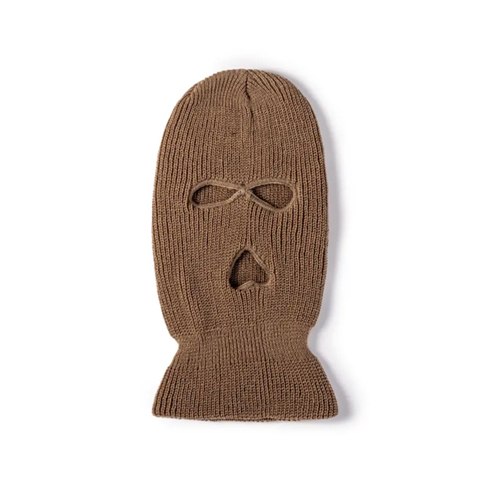
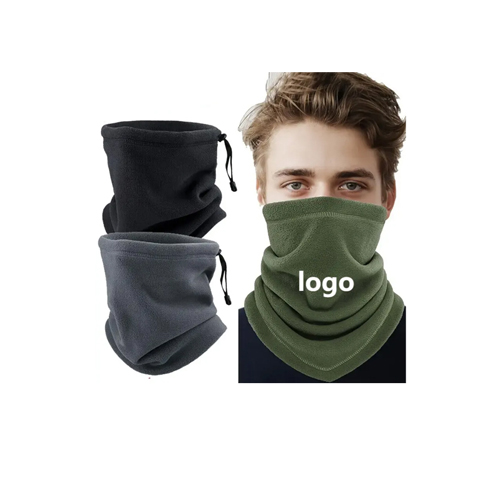
The next step is to define the wearing configuration. Some designs cover the full face except the eyes. Others have a hinged panel that can be pulled below the mouth. Some combine a hood and neck gaiter, while others are close-fitting one-hole knitted styles. The specification should include front, side, and back views and should state whether the opening must accommodate glasses, helmets, long hair, or other equipment. A flat image without wearing context can hide critical fit requirements.
At minimum, a sourcing brief should include the following:
target market, sales channel, and intended use;
adult, youth, child, or unisex size range;
preferred material composition and approximate fabric weight;
stretch direction and recovery expectations;
single-layer, double-layer, lined, or panelled construction;
face opening dimensions and allowable tolerance;
seam type and restricted seam locations;
logo method, color, size, and placement;
care label, fiber-content label, country-of-origin label, and barcode needs;
individual packaging, carton quantity, carton marks, and retail presentation;
required test reports or market-specific compliance documents;
sample stages, approval authority, order quantity, delivery destination, and target date.
When buyers provide these details, suppliers can quote the same product concept rather than different interpretations. This makes unit-price comparisons more useful and reduces the chance of late-stage surcharges. JIBIL typically recommends confirming the technical specification before locking the production price, especially when the design uses custom-milled fabric, complex panels, reflective components, embroidery, printed branding, or retail packaging.
A material and construction matrix compares how fabric composition, weight, stretch, seam structure, and layering affect comfort, warmth, durability, cost, and manufacturability.
Material selection is the most visible buying decision, but composition alone does not predict performance. Two products labeled "100% polyester" can feel very different because of yarn type, knit structure, brushing, fabric weight, finishing, and stretch. Buyers should therefore approve a physical fabric swatch or a finished sample rather than relying only on the fiber name.
| Material option | Typical commercial use | Main advantages | Common risks to check | Best buyer questions |
|---|---|---|---|---|
| Polyester jersey or performance knit | Running, cycling, lightweight outdoor use, promotional programs | Low weight, quick drying, broad print compatibility, scalable production | Odor retention, excessive shine, weak recovery, seam irritation | What is the fabric weight, stretch percentage, recovery result, and moisture-management finish? |
| Brushed polyester fleece | Winter retail, workwear, skiing, cold-weather promotions | Warm hand feel, accessible cost, stable color options, easy care | Pilling, bulk around seams, limited breathability, inconsistent brushing | Which side is brushed, what pilling standard is used, and how is thickness controlled? |
| Acrylic knit | Fashion, promotional headwear, economical winter programs | Knitted appearance, flexible color development, familiar winter positioning | Itching, yarn inconsistency, shape growth, pilling | What yarn count and knit gauge are used, and how is size recovery checked after washing? |
| Merino wool or merino blend | Premium outdoor, travel, cold-weather performance | Softness potential, temperature regulation, premium brand story | Higher cost, shrinkage, fiber authenticity, care complexity | Can composition be verified, what shrinkage result is achieved, and what care instructions are recommended? |
| Recycled polyester | Sustainability-led retail and corporate programs | Supports recycled-content sourcing objectives and broad performance-fabric development | Unsupported claims, batch shade variation, document mismatch | Which certification scope applies to the material and facility, and can transaction documentation be supplied when required? |
| Spandex-containing blend | Close fit, sports, multi-panel performance designs | Improved stretch and fit potential | Heat sensitivity, reduced recovery after repeated use, uneven tension | What is the elastane percentage, stretch direction, and recovery after conditioning or washing? |
Typical commercial fabric weights can range widely. Lightweight performance knits may fall around 140–200 grams per square meter, while brushed fleece constructions may commonly fall around 180–280 grams per square meter. These are sourcing bands rather than universal standards. A buyer should not select a fabric by weight alone: a dense 180 gsm knit may block more airflow than a loftier fabric with a higher nominal weight.
Construction choices are equally important. A simple one-piece knitted balaclava may be efficient for promotions and fashion, while a multi-panel sewn design can provide more controlled contours around the crown, jaw, nose, and neck. Flat seams can reduce bulk in close-fitting performance products, but they require suitable machinery and operator skill. Overlock seams are efficient and widely used, yet seam placement should be checked carefully where a helmet, glasses, or skin contact creates pressure.
For a hinged design, the overlap between the upper and lower sections should be tested in several positions. The panel should remain stable when covering the mouth and should not create excessive tension when pulled below the chin. For a one-hole design, check whether the opening stretches smoothly without distorting or exposing rough seam allowances. For a long-neck design, confirm whether the lower section stays tucked inside a jacket during movement.
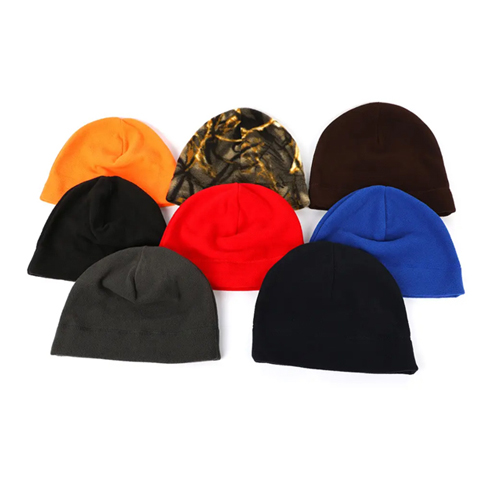
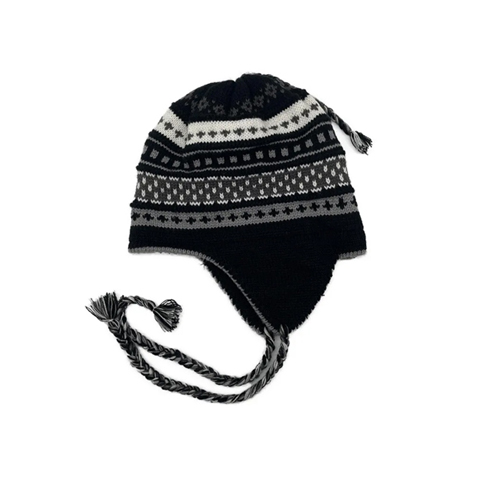
Buyers considering adjacent winter headwear can compare the balaclava specification with a beanie China program. Beanies prioritize crown fit and cuff structure, while balaclavas require greater control over facial geometry, breathing zones, neck coverage, and seam comfort. Treating both products as generic knitted headwear can lead to an incomplete quality plan.
A balaclava manufacturer audit is a structured review of the supplier's legal identity, technical capability, quality system, workforce, equipment, traceability, compliance controls, and order-management process.
A polished showroom or attractive website does not by itself prove that a supplier can control bulk production. Buyers should distinguish between a trading company, a general apparel factory, a specialist headwear producer, and an integrated group that coordinates multiple production sites. Any of these models can work, but the buyer needs to understand who performs cutting, knitting, sewing, printing, embroidery, inspection, packaging, and final shipment preparation.
The following 12-point audit provides a practical starting framework:
Business identity: Confirm the legal company name, registered address, export entity, invoicing entity, and payment beneficiary.
Product experience: Ask for recent examples of comparable balaclava constructions, materials, branding methods, and target markets.
Development capability: Review whether the supplier can create patterns, grade sizes, source fabrics, develop colors, and document revisions.
Equipment fit: Check knitting, cutting, flatlock, overlock, cover-stitch, embroidery, printing, pressing, metal detection, and packing capability as relevant.
Material control: Verify how incoming fabric, yarn, trims, labels, and packaging are identified, inspected, and stored.
Color management: Ask how lab dips, bulk dye lots, color standards, and shade bands are approved and controlled.
In-line quality: Review inspection points for dimensions, seam quality, logo placement, opening geometry, stains, and workmanship.
Final inspection: Confirm the sampling plan, defect categories, inspection records, and procedure for rework or rejection.
Traceability: Determine whether finished cartons can be linked to production date, material batch, line, and inspection record.
Social and ethical controls: Review relevant audit status, working-hour controls, subcontracting disclosure, and corrective-action records.
Compliance documentation: Confirm who owns test reports, whether reports match the material and color, and whether documents are still valid for the intended market.
Capacity and continuity: Compare promised lead time with actual line loading, peak-season demand, backup capacity, and raw-material lead times.
The objective is not to collect certificates for a file. It is to determine whether the supplier's system can prevent, detect, and correct problems. For example, a factory may own a needle detector, but the buyer should still ask how often it is calibrated, which products pass through it, how rejected items are isolated, and whether records are retained.
JIBIL operates as part of an apparel and accessories manufacturing group with more than 30 years of industry experience. The company publicly states that it works with more than six factories, more than 300 workers, production capacity above 1.8 million pieces per month, customers in more than 60 countries, and more than 1,000 customers. These figures can help a buyer understand scale, but they should still be matched to the specific product, season, material, and delivery schedule under discussion. Capacity should always be reserved against an approved order plan rather than assumed from group-level figures.
A supplier comparison table normalizes technical, commercial, quality, compliance, and delivery information so buyers can compare total sourcing risk rather than unit price alone.
| Evaluation area | Supplier A | Supplier B | Supplier C | Recommended evidence |
|---|---|---|---|---|
| Quoted specification | Record material, weight, size, construction | Record material, weight, size, construction | Record material, weight, size, construction | Signed specification sheet and sample reference |
| Sample accuracy | Score fit, seams, color, logo | Score fit, seams, color, logo | Score fit, seams, color, logo | Wear test and measured sample report |
| Testing plan | List included and optional tests | List included and optional tests | List included and optional tests | Laboratory quotation and test method |
| Compliance support | Market-specific documents | Market-specific documents | Market-specific documents | Reports matching material, color, and supplier scope |
| Branding capability | Embroidery, print, patch, label | Embroidery, print, patch, label | Embroidery, print, patch, label | Physical strike-off and placement template |
| MOQ and price basis | State quantity and inclusions | State quantity and inclusions | State quantity and inclusions | Itemized quotation with packaging and testing |
| Production lead time | Material plus production days | Material plus production days | Material plus production days | Critical-path schedule |
| Quality plan | Incoming, in-line, final | Incoming, in-line, final | Incoming, in-line, final | Inspection checklist and defect classification |
| Traceability | Batch and carton identification | Batch and carton identification | Batch and carton identification | Sample production and packing records |
| Total landed risk | Low, medium, or high | Low, medium, or high | Low, medium, or high | Buyer decision with reasons and mitigation actions |
A lower unit price is valuable only when the quoted scope is equivalent. One supplier may include woven labels, individual bags, carton marks, testing support, and final inspection, while another quote may exclude these items. Buyers should separate one-time development charges, tooling, sample fees, logo setup, packaging, third-party testing, inspection, freight, duties, and payment costs from the production unit price.
Use a weighted score rather than a purely subjective selection. For example, a buyer may allocate 30 percent to product and sample performance, 20 percent to quality systems, 15 percent to compliance readiness, 15 percent to delivery reliability, 10 percent to communication and development speed, and 10 percent to price. The percentages can change by project, but the method forces the team to document why a supplier was selected.
A branding method is the process used to apply a logo, graphic, label, patch, or retail identity to the balaclava without compromising fit, comfort, appearance, or durability.
Branding must be considered during construction planning, not added after the product is finished. A dense embroidery design can stiffen a thin fabric. A large heat-transfer graphic can reduce breathability. A woven patch may create an uncomfortable edge. A print may crack if it is placed across a high-stretch zone. The correct method depends on fabric, artwork, logo size, stretch, color count, order quantity, and intended look.
| Branding method | Best suited to | Advantages | Risks to test |
|---|---|---|---|
| Embroidery | Knit or stable fleece areas | Premium appearance, dimensional texture, durable identity | Fabric puckering, stiffness, backing irritation, distorted small text |
| Heat transfer | Performance knits and small logos | Sharp detail, flexible colors, efficient customization | Peeling, cracking, gloss difference, reduced stretch |
| Screen or transfer print | Promotional graphics and larger artwork | Strong visual impact and scalable production | Ink hand feel, color migration, curing consistency, blocked airflow |
| Woven label | Side seam, lower edge, or external branding point | Clear brand presentation and flexible color detail | Scratchy edges, poor folding, seam distortion |
| Silicone or rubber patch | Outdoor or technical visual positioning | Raised modern look and weather-resistant appearance | Weight, cold stiffness, attachment strength, skin contact |
| Jacquard knit | Knitted balaclavas and repeated patterns | Brand is integrated into the structure | Higher development complexity, limited detail, pattern distortion |
Before bulk approval, request a branding strike-off on the actual production fabric. Approving a logo on paper or on substitute fabric is not sufficient. The buyer should check artwork dimensions, color reference, position from fixed seams, orientation when worn, appearance under stretch, reverse-side comfort, and durability after the agreed care cycle.
For coordinated winter collections, a buyer may also develop wholesale beanie hats with ear flaps using the same yarn palette, logo system, and packaging architecture. Coordinated development can improve collection consistency, but each product still requires its own fit and workmanship approval.
Definition: Compliance control is the process of identifying applicable legal requirements, product tests, labels, documentation, and marketing claims for the intended market and end use.
Compliance is market-specific. A test report that supports one fabric, one color, or one market does not automatically cover every variation. The buyer should provide the destination countries, consumer age group, product claims, and intended use so that the supplier and a qualified laboratory can identify applicable requirements.
In the United States, ordinary clothing textiles may fall within the scope of the Flammable Fabrics Act and 16 CFR Part 1610. The standard classifies clothing textiles into three flammability classes. Buyers should consult the regulation and competent compliance professionals to determine the correct testing and documentation for their product. A balaclava marketed for children, work, specialized protective use, or another regulated application may require additional review.
For the European Union, the General Product Safety Regulation, Regulation (EU) 2023/988, strengthens general product-safety responsibilities for consumer products. Importers and brand owners should evaluate product risks, traceability, labeling, economic-operator information, complaint handling, and recall readiness. The exact obligations depend on the supply-chain role and the product.
Voluntary standards and certifications can also support buyer requirements. OEKO-TEX STANDARD 100 is a widely recognized label for textiles tested for harmful substances. Recycled-material programs may involve standards such as the Global Recycled Standard, but a buyer should verify the certified organization, product scope, material flow, and transaction documents rather than relying on a logo shown in a presentation.
Marketing claims need equal care. Terms such as "waterproof," "antibacterial," "UV protective," "fire resistant," "medical grade," "tactical," or "protective" should not be used without evidence appropriate to the claim and market. Most fashion and general outdoor balaclavas are not personal protective equipment. If the product is intended to protect against a regulated hazard, a separate technical and conformity-assessment process may be required.
A useful compliance file may include:
approved product specification and bill of materials;
fiber composition and care-label artwork;
supplier and production-site identity;
material and finished-product test reports;
risk assessment and market-specific review;
logo and claim substantiation;
inspection reports and batch records;
packaging and traceability artwork;
complaint, corrective-action, and recall procedure.
Sample approval is a controlled sequence in which the buyer reviews design, fit, materials, colors, branding, packaging, and production readiness before authorizing bulk manufacturing.
A single sample should not carry every approval decision. Separating sample stages makes revisions easier to track and prevents a visually attractive sample from hiding an unapproved material or construction change. A four-stage sequence is practical for many custom balaclava projects.
Development prototype: Confirms general shape, panel concept, opening design, and wearing configuration. Substitute material may be acceptable if documented.
Fit and material sample: Uses the intended fabric or yarn and is evaluated on representative users. Dimensions, stretch, recovery, seam comfort, breathing, visibility, and neck coverage are checked.
Pre-production sample: Uses approved bulk materials, final colors, branding, labels, and packaging. This sample should match the planned production method.
Sealed reference: Buyer and supplier retain signed or otherwise controlled reference samples and specification versions for in-line and final inspection.
During wear testing, evaluate more than static fit. Ask testers to turn the head, speak, breathe through the intended panel, put on glasses or a helmet if relevant, pull the face section down and back up, and wear the product long enough to identify pressure points. Record tester head measurements and the sample size so feedback can be interpreted rather than treated as a general opinion.
For dimensional approval, define fixed measurement points. Examples include total center-back length, crown width, neck opening width, face opening height and width, eye-opening position, lower-panel overlap, and logo distance from a seam. The specification should state whether measurements are taken relaxed, lightly stretched, or under a defined tension. Without a method, two inspectors may produce different results from the same piece.
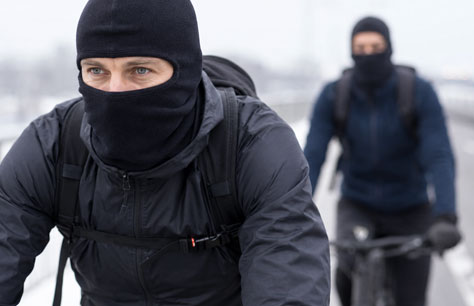
A bulk quality-control plan defines what is inspected, when it is inspected, how results are recorded, which defects are critical, and what actions follow a failed result.
Quality should be controlled throughout production, not only after all cartons are sealed. Incoming inspection checks fabric, yarn, trims, labels, packaging, and shade. First-piece approval confirms machine settings, measurements, seam appearance, and branding. In-line inspection catches recurring workmanship issues while repair remains practical. Final inspection verifies finished quantity, assortment, appearance, dimensions, packaging, and carton marks.
A balaclava defect list may include:
incorrect material, color, size, branding, or label;
face opening positioned too high, low, wide, or narrow;
twisted panels or asymmetric seam alignment;
broken stitches, skipped stitches, open seams, raw edges, or unsecured thread ends;
puckering or excessive seam bulk against the skin;
oil, dirt, dye, glue, odor, or contamination;
logo distortion, incorrect orientation, poor adhesion, or wrong placement;
shade variation within one piece or one shipment;
weak stretch recovery or inconsistent overall dimensions;
wrong packaging, barcode, assortment, carton mark, or quantity.
Many buyers use acceptance-quality-limit sampling for final inspection. A commonly discussed starting point for general consumer goods is AQL 2.5 for major defects and 4.0 for minor defects, but this is not a universal legal requirement. The appropriate sampling plan, inspection level, and defect limits should be agreed according to brand risk, order history, product complexity, and customer requirements. Critical defects are normally treated separately and may require zero acceptance.
Testing should also be risk-based. Depending on material and market, the plan may include fiber composition, colorfastness, dimensional stability, pilling, abrasion, seam strength, restricted substances, flammability, or claim-specific testing. The buyer should agree whether testing occurs on fabric, finished product, or both, and should confirm which colorways or components are represented.
Commercial order planning links minimum quantity, material availability, development time, production capacity, testing, packaging, transport, and payment terms into a realistic landed-cost and delivery schedule.
MOQ is not determined by sewing alone. Custom yarn dyeing, fabric dyeing, printing, labels, packaging, and logo methods can each have separate minimum quantities. A supplier may be able to sew a small order but may need to purchase a larger material lot. Buyers should ask whether the quoted MOQ applies per style, color, size, logo, or total order.
Lead time should be broken into stages:
specification clarification and quotation;
fabric or yarn sourcing and lab-dip approval;
prototype and fit-sample development;
pre-production sample and testing;
bulk material production;
cutting, knitting, sewing, branding, and finishing;
inspection, rework, packing, and shipment booking;
international transport and import clearance.
A schedule expressed only as "30 days" can be misleading if the start point is not defined. Ask whether the production lead time begins after deposit, after artwork approval, after material approval, or after pre-production sample approval. Peak-season capacity and national holidays should be considered early, especially for winter products that must arrive before a fixed retail launch.
Cost drivers include fabric composition and weight, yarn quality, number of panels, seam type, lining, breathable mesh, reflective details, logo technique, number of colors, size range, labels, individual packaging, testing, inspection, and order volume. A buyer can often reduce cost without reducing perceived quality by simplifying hidden construction, standardizing colors across products, using existing packaging sizes, or consolidating logo methods. However, reducing fabric quality, seam reinforcement, or inspection may create higher downstream costs through returns and rework.
A sourcing risk register records likely failures, their causes, commercial impact, warning signs, preventive controls, and responsible owners before production begins.
| Risk | Early warning sign | Potential impact | Preventive control |
|---|---|---|---|
| Opening geometry changes in bulk | Sample dimensions are not documented | Poor visibility, returns, inconsistent fit | Fixed measurement method, tolerance table, first-piece approval |
| Fabric feels different from sample | Supplier cannot identify mill or batch | Comfort complaints and inconsistent branding | Approved swatch, bulk-lot confirmation, incoming inspection |
| Logo cracks or distorts | Strike-off tested only unstretched | Visible failure after wear or washing | Actual-fabric trial, stretch review, wash test |
| Color varies by carton | Multiple dye lots without shade control | Retail assortment inconsistency | Shade bands, lot segregation, carton traceability |
| Compliance report does not match | Report uses another composition or supplier | Shipment delay, relabeling, market risk | Document matrix tied to BOM and destination |
| Delivery slips | Material and approval dates are missing | Missed season or promotion | Critical-path schedule with weekly milestones |
| Subcontracting is undisclosed | Production address changes late | Quality and social-compliance uncertainty | Approved site list and change-notification clause |
| Final cartons contain wrong assortment | Packing list is not line-verified | Warehouse rework and customer shortages | Barcode scan, packing audit, pre-shipment inspection |
Each high-risk item should have an owner and deadline. For example, the factory may own bulk shade control, the buyer may own final artwork approval, the laboratory may own testing, and the inspection company may own pre-shipment verification. Shared responsibility should still be documented so a task is not assumed by both parties and completed by neither.
JIBIL's balaclava sourcing support combines product development, material selection, custom branding, manufacturing coordination, inspection, and export service for wholesale and private-label programs.
JIBIL supports buyers that need more than an off-the-shelf catalog item. The development process can begin with a reference product, drawing, concept image, existing specification, or target application. The team can discuss fabric and yarn options, panel structure, sizing, logo methods, labels, packaging, and sampling. This is particularly useful when a brand is coordinating balaclavas with beanies, scarves, gloves, socks, bags, or other textile accessories.
The value of an experienced supplier is not that every question has an instant answer. It is that uncertainties are identified before production, options are compared transparently, and approvals are converted into controlled documents. Buyers should expect clear communication about what is standard, what requires custom development, which elements affect MOQ, and which claims require testing.
JIBIL's published manufacturing scale and export experience can support high-volume and multi-category programs, while the buyer's specific project should still be validated through samples, schedule confirmation, quality planning, and documentation. A well-managed first order creates the reference data needed for faster repeat orders and future color or size extensions.
These frequently asked questions address the practical decisions buyers make when selecting a Chinese balaclava supplier and preparing a custom wholesale order.
Send the intended use, target market, quantity, size range, material composition, approximate fabric weight, construction images, face-opening design, colors, logo method, labels, packaging, testing requirements, destination, and required delivery date. A physical reference sample or measured technical drawing makes quotations more comparable. State which elements are mandatory and which may be optimized by the supplier.
There is no universal best material. Lightweight polyester knits suit active use and printing; brushed fleece prioritizes warmth and value; acrylic knit provides a traditional winter look; merino or merino blends support premium positioning; and elastane blends can improve close fit. Select the material from the end-use requirement, then approve hand feel, stretch, recovery, seam compatibility, care performance, and relevant test results.
Review the legal entity, production address, product samples, equipment, operators, material warehouse, in-line inspection, packing area, traceability records, and recent comparable orders. Ask which processes are completed in-house and which are subcontracted. A video audit can support early screening, but an on-site or independent audit provides stronger evidence for high-value programs.
Use separate stages for shape development, fit and material approval, pre-production approval, and sealed reference samples. Test the product while moving, speaking, breathing, and using relevant glasses or helmets. Approve fixed dimensions, tolerances, actual bulk material, final colors, logo placement, labels, packaging, and care instructions before authorizing production.
Most fashion, promotional, and general outdoor balaclavas are not automatically personal protective equipment. A product intended to protect against a regulated hazard may fall under additional standards, testing, labeling, and conformity requirements. Avoid protective claims unless the design and evidence support them, and consult qualified compliance professionals for the destination market and intended use.
Quality control can include material confirmation, sample approval, first-piece review, in-line inspection, dimensional checks, workmanship review, branding verification, packaging inspection, and final sampling according to the agreed plan. The exact checkpoints and tests are defined by product risk, market, order size, material, and buyer requirements. Buyers can also arrange independent inspection when required.
The following official sources provide regulatory or certification information that buyers can review with their own compliance advisers.
Successful balaclava sourcing is the result of a controlled specification, verified supplier capability, approved samples, market-appropriate compliance, and documented quality checks.
A dependable balaclava order does not begin with the lowest unit price. It begins with a clear end use and a specification that suppliers can reproduce. Material composition, fabric weight, stretch recovery, face-opening geometry, seam placement, branding, labeling, testing, and packaging should all be reviewed before production.
Buyers can reduce risk by using a structured supplier audit, comparing quotations on the same scope, separating sample stages, creating a risk register, and inspecting production at more than one point. Compliance documents and marketing claims should be matched to the actual product and destination market rather than copied from a previous style.
JIBIL can support brands, distributors, retailers, and promotional buyers with custom balaclava development and coordinated textile accessory programs. To prepare a useful quotation, share your target market, expected quantity, material preference, sample or drawing, logo artwork, packaging requirements, and delivery window. The more clearly the project is defined, the more accurately cost, lead time, quality, and compliance can be managed.