






Tel:
+86-0511-88891902

What are you looking for?
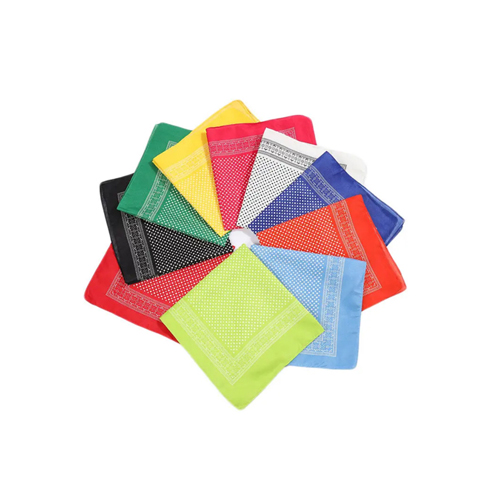
A bandana looks simple, but material choice directly affects how it feels on skin, how well it holds print color after washing, and how profitable it is at scale. For brands, promotional programs, and uniform buyers, sourcing from bandana China manufacturers unlocks a wide range of fabric and printing options — if you specify the right blend, weave, and print method from the start. This guide compares cotton and polyester bandanas with a practical buyer-focused checklist for every stage of the order.
The material decision is the first and most important specification in any bandana program. It determines everything downstream — print method, wash performance, feel against skin, and the price point you can realistically deliver.
Performance Comparison
| Property | Cotton Bandana | Polyester Bandana |
|---|---|---|
| Softness and hand-feel | Soft, natural, comfortable for extended skin contact | Smoother but can feel slightly synthetic against skin |
| Breathability | High — air moves through the weave freely | Lower — polyester traps more heat |
| Moisture management | Absorbs moisture; slower to dry | Wicks and dries faster — better for active use |
| Shape stability | Can stretch and wrinkle with wear and washing | Holds shape better; less prone to wrinkle |
| Print suitability | Screen print, reactive dye, pigment print | Sublimation excels; screen print is limited |
| Weight options | Wide range from 80 to 200+ GSM | Typically lighter gauges for most applications |
| Eco and skin perception | Preferred by customers with sensitivity; perceived as natural | Less preferred for skin-contact items in some markets |
Use-Case Matching Guide
| Application | Recommended Material |
|---|---|
| Fashion and streetwear accessories | Cotton — hand-feel and drape are a selling point |
| Promotional and event giveaways | Cotton or poly-cotton blend — cost-effective, widely accepted |
| Workwear and uniform programs | Cotton or blend — comfort during extended wear |
| Outdoor, sport, and activewear | Polyester — moisture management and durability |
| Highly graphic or photographic print designs | Polyester — sublimation produces the most vibrant result |
Print method and fabric must be matched correctly — applying the wrong print technique to the wrong fabric base is the most common cause of fading, cracking, and color inconsistency after washing.
Print Method Comparison
| Print Method | Best Fabric | Color Vibrancy | Wash Durability | Limitations |
|---|---|---|---|---|
| Screen print | Cotton and blends | Good — solid color blocks perform well | Good with correct ink and cure | Color count adds cost; photographic detail is limited |
| Reactive dye print | Cotton | Excellent — color bonds to fiber | Very good — part of the fabric, not a surface layer | Requires pre-treatment; more complex process |
| Pigment print | Cotton and blends | Good for lighter colors | Moderate — surface application; can crack if not well-set | Not ideal for dark or very vibrant designs |
| Sublimation | Polyester only (above 65% poly) | Outstanding — photographic quality, full bleed | Excellent — dye bonds permanently to fiber | Cannot use on cotton; light fabric colors only |
| Digital inkjet (direct to fabric) | Cotton and blends | Good — improving with technology | Moderate to good | Slower for high volumes; depends heavily on pre-treatment |
Buyer Specifications to Lock Before Ordering
Color count per design — affects screen print pricing directly
Pantone color references — do not leave color matching to supplier interpretation
One-side or two-side print — two-side is significantly more expensive
Bleed-through expectation — some buyers want print visible on both sides; others want clean reverse
Print size and placement — define in mm, not descriptively
Beyond material type, the specific construction details determine whether a bandana feels premium or generic — and whether it generates returns based on fit complaints.
Fabric Weight and Drape
| GSM Range | Feel and Drape | Best Application |
|---|---|---|
| 80–100 GSM | Lightweight, sheer, flows easily | Fashion styling, warm-climate markets |
| 110–140 GSM | Mid-weight, good balance of drape and body | General purpose, most promotional programs |
| 150–200 GSM | Heavier, more structured, opaque | Workwear, outdoor, cold-climate use |
Edge Finishing Options
| Edge Finish | Appearance | Cost | Perceived Quality |
|---|---|---|---|
| Hemmed (folded and stitched) | Clean, neat, defined edge | Standard | Most professional; preferred for fashion and promo |
| Overlock (serged) | Functional, tighter edge | Lower | Acceptable for utility; less premium in appearance |
| Rolled hem | Very clean, fine edge | Higher | Premium finish; common on fashion-grade products |
| Raw cut (no finish) | Casual, deliberately unfinished | Lowest | Works only if intentional in the design concept |
Size Standards
Square formats are the most common in wholesale bandana programs. Confirm finished size with your supplier before production — not pre-cut or pre-wash size. Define the acceptable tolerance (typically plus or minus 1 cm) and confirm that the measurement is taken after any pre-washing or finishing steps that affect dimensions.
QC issues on bandanas cluster into three areas — dimensional changes after washing, color performance, and print registration. All three are manageable with the right specification and pre-shipment testing.
Common QC Issues and Prevention
| Issue | Root Cause | Prevention |
|---|---|---|
| Cotton shrinkage | Natural fiber contraction in hot water wash | Specify shrinkage tolerance (e.g., maximum 5%); request pre-washed fabric option or wash-test samples |
| Dye bleeding | Poor dye fixation or insufficient post-wash rinsing | Specify colorfastness grade; request wet rub test result (minimum Grade 3–4) |
| Color crocking | Surface dye transferring on dry contact | Request dry rub test (minimum Grade 4) |
| Print misalignment | Fabric movement during printing or poor registration setup | Define maximum acceptable misalignment (e.g., plus or minus 3 mm); confirm on pre-production sample |
| Inconsistent print saturation | Ink viscosity variation or uneven fabric pre-treatment | Request bulk production photos; compare against approved sample |
| Fading after washing | Incorrect ink type or insufficient curing for screen print | Specify wash test — minimum 20 machine wash cycles before delivery confirmation |
Pre-Shipment Inspection Checklist
| Check | Method | Accept Criteria |
|---|---|---|
| Finished dimensions | Flat measurement after wash | Within plus or minus 1 cm of specification |
| Edge stitching quality | Visual and pull test | Even stitching; no loose threads or missed stitches |
| Print alignment | Measure from edge reference | Within plus or minus 3 mm of approved placement |
| Colorfastness | Compare washed sample to unwashed reference | No visible color loss or transfer |
| Odor | Physical inspection | No chemical, dye, or mildew odor |
| Packaging | Visual check per unit | Correct folding, label, barcode, and polybag seal |
Understanding what drives bandana pricing allows buyers to make trade-offs that protect margin without compromising on the specifications that matter most to their customers.
Key Pricing Variables
| Variable | Cost Impact | Buyer Control |
|---|---|---|
| Fabric type | Cotton typically costs more than polyester at comparable GSM | Specify based on use case, not default assumption |
| GSM | Heavier fabric costs more per unit | Match GSM to application; avoid over-specifying for promotional items |
| Print method | Screen print: cost by color count; sublimation: higher setup, lower per-unit at volume | Choose method based on design complexity and order volume |
| Color count | Each additional screen color adds setup and run cost | Simplify designs for lower MOQ or promotional programs |
| Edge finish | Rolled hem costs more than hemmed or overlock | Reserve rolled hem for premium tier; use hemmed for standard programs |
| Packaging | Individual polybag, hang tag, and retail packaging add cost | Confirm packaging requirement before pricing; bulk program vs retail program differ significantly |
MOQ and Lead Time Planning
| Order Type | Typical MOQ | Lead Time |
|---|---|---|
| Blank or stock colors | 100–300 units | 2–3 weeks |
| Custom color, standard print | 300–500 units | 3–4 weeks |
| Custom sublimation print | 200–500 units | 3–5 weeks |
| Custom jacquard or woven label | 500+ units | 5–7 weeks |
Buyer Decision Summary
Choose cotton when comfort and natural hand-feel are the primary customer expectation — fashion styling, workwear, and promotional items where the bandana will be worn against skin.
Choose polyester when color vibrancy and print durability are the priority — particularly for full-color photographic designs, outdoor use, or activewear programs where sublimation printing delivers results that cotton-based methods cannot match.
Choose a poly-cotton blend when you need a balance of softness and performance — common for general-purpose promotional programs where both feel and cost are constrained.
The best bandana for your program depends on what your customers will notice most — comfort, color vibrancy, wash durability, or the lowest delivered cost. By matching fabric choice to the right print method and setting clear QC standards with a reliable bandana China supplier, you can reduce returns, protect print quality across reorders, and build a consistent product that performs in the market.
Q1: Is cotton or polyester better for a bandana?
Cotton is typically softer and more breathable, making it the preferred choice for fashion accessories, workwear, and any application where the bandana is worn directly against skin for extended periods. Polyester is more durable, quick-drying, and produces significantly more vibrant print results through sublimation — making it the better choice for graphic-heavy designs and outdoor or active use.
Q2: Which printing method is best for polyester bandanas?
Sublimation is the standard recommendation for polyester bandanas. The dye bonds permanently to the polyester fiber during the heat-transfer process, producing photographic-quality color that resists fading even after repeated washing. Sublimation requires a minimum of approximately 65% polyester content to perform correctly.
Q3: Do cotton bandanas shrink after washing?
Cotton bandanas can shrink, particularly in hot water. Buyers should specify a maximum acceptable shrinkage tolerance — typically 5% or less — request wash-test samples before approving bulk production, and consider asking for pre-washed fabric if dimensional consistency after customer washing is critical to your program.
Q4: What size is most common for wholesale bandanas?
Square formats are the most common in wholesale bandana programs. The exact finished size varies by market and application. Always confirm the finished size specification in mm — not the pre-cut or pre-wash size — and define your acceptable dimensional tolerance before production begins.
Q5: What should I confirm with a bandana China supplier before placing an order?
Fabric composition and GSM, print method and its compatibility with the fabric, Pantone or reference color matching approach, edge finish type and quality standard, colorfastness and shrinkage test requirements, packaging specification, production lead time, and the process for maintaining color and construction consistency across reorders.